


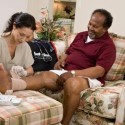
Wound Care is one of the quickest growing need for home healthcare services. Studies have shown that wound care is responsible for more than one third of home healthcare patient needs and about forty-two percent of these patients have multiple wounds. Home health wound care involves the treatment and prevention of acute and chronic wounds in a home environment.
Wound care in the home is very different from wound care in the hospital. There are a number of factors such as wound type, hygiene, age and nutrition that affect wound healing. All of these factors make home would care challenging. It is best to seek out a home healthcare service to help with wound care. Once a home healthcare service has been retained, a skilled nurse will go to the patient’s home to assess the patient’s needs and then work with the doctor to create a care plan. It is the responsibility of a skilled nurse to provide clinical expertise when caring for wounds. The skilled nurse will also work with other members of the patient’s healthcare team and provide educational information to the patient and family.
- a patient centered treatment plan that includes the cause of the wound, nutrition, environment and specific care protocol
- treatment of draining wounds
- treatment of acute (short-term) wound
- treatment of chronic (long-term) wound.
- Trauma wounds
- Surgical wounds
- Pressure ulcers (bed sores)
- Venous stasis ulcers
- Arterial ulcers
- Diabetic ulcers
- Fistulas
- Ostomies
- Tubes and drains
- Wounds such as those caused by radiation, neoplasm and others


Sorry, comments are closed for this post.